
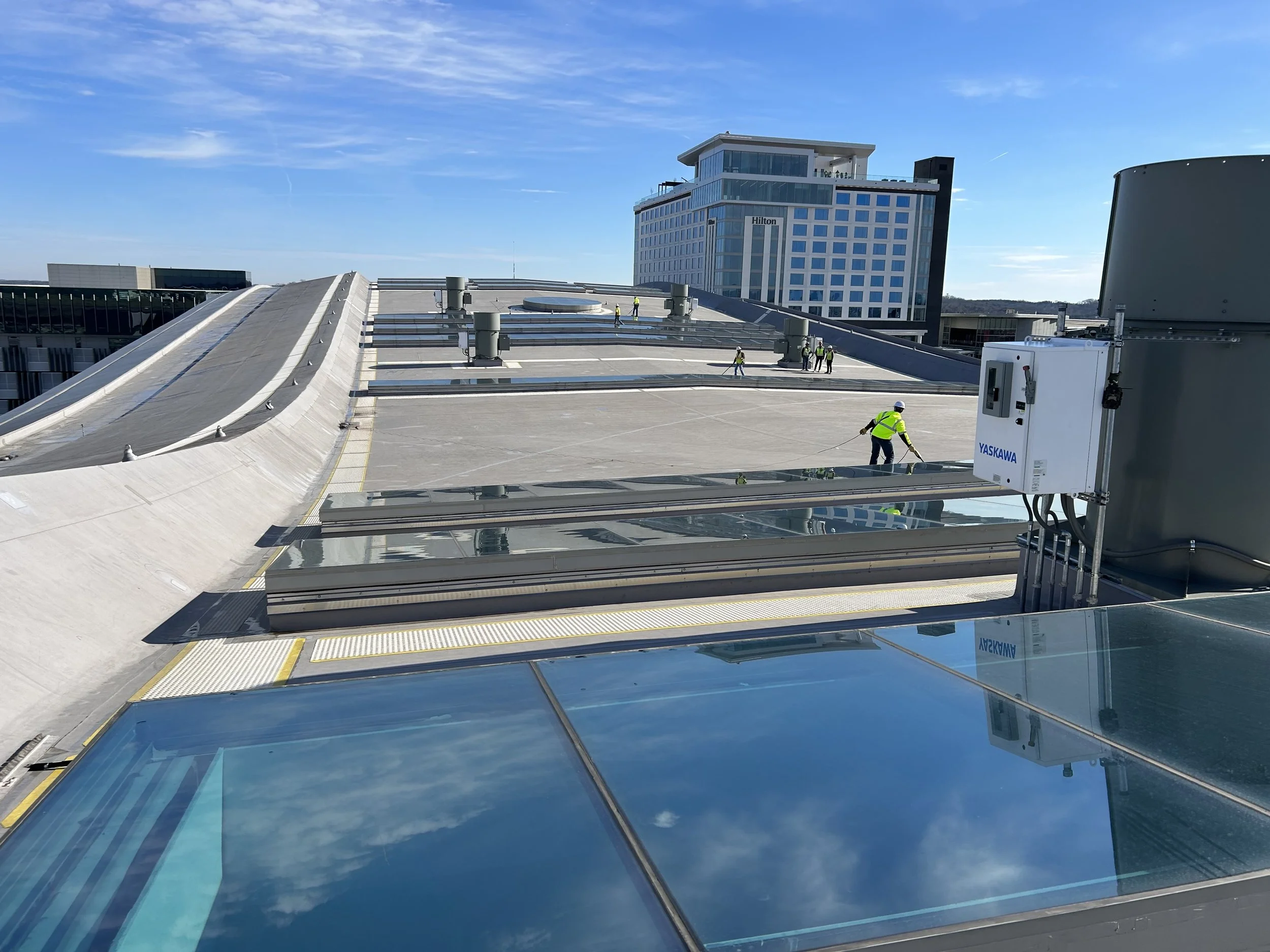
Independent Roof Testing,
Investigation & Certification
Objective forensic analysis to identify
failures before they become liabilities.
FAST TURNAROUND, REAL COMMUNICATION.
Core Services
Roof Analyzers utilizes advanced diagnostic technologies including High Voltage Electronic Leak Detection (ELD) sweeps and Low Voltage Vector Mapping to identify moisture intrusion, membrane breaches, and hidden system deficiencies in commercial roofing assemblies. These non-destructive testing methods allow our team to accurately locate leaks, assess installation integrity, and evaluate overall roof performance—providing objective data that supports informed repair, maintenance, and asset management decisions.
Manual testing methods themselves aren’t proprietary—but the results depend heavily on the skill of the technician using them. Electronic leak detection is part science and part craft, and when it’s used as a stand-alone approach, outcomes can vary.
After years in the field, we’ve found the most efficient and cost-effective protocol is a two-step process High-Voltage Sweep (HV) of the entire roof assembly and Low-Voltage Vector Mapping (LV) for precision and verification. This combined approach delivers a more complete, reliable evaluation than either method alone. And on every project, we leave behind a fully installed On-Demand System for future non-invasive testing.
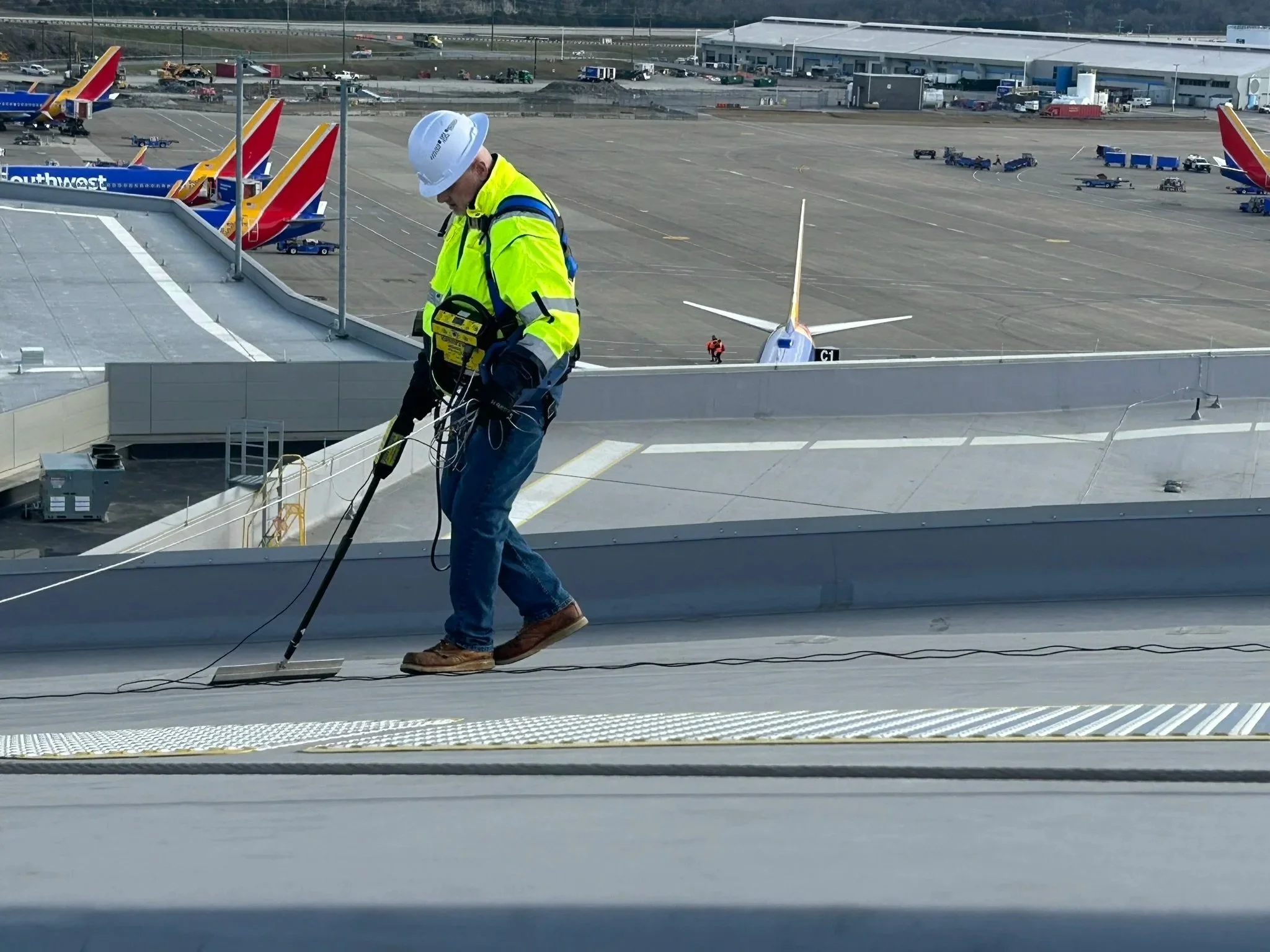
High Voltage Sweep
Electronic Leak Detection testing used to identify breaches in roofing membranes by locating moisture pathways and points of water ingress with pinpoint accuracy.
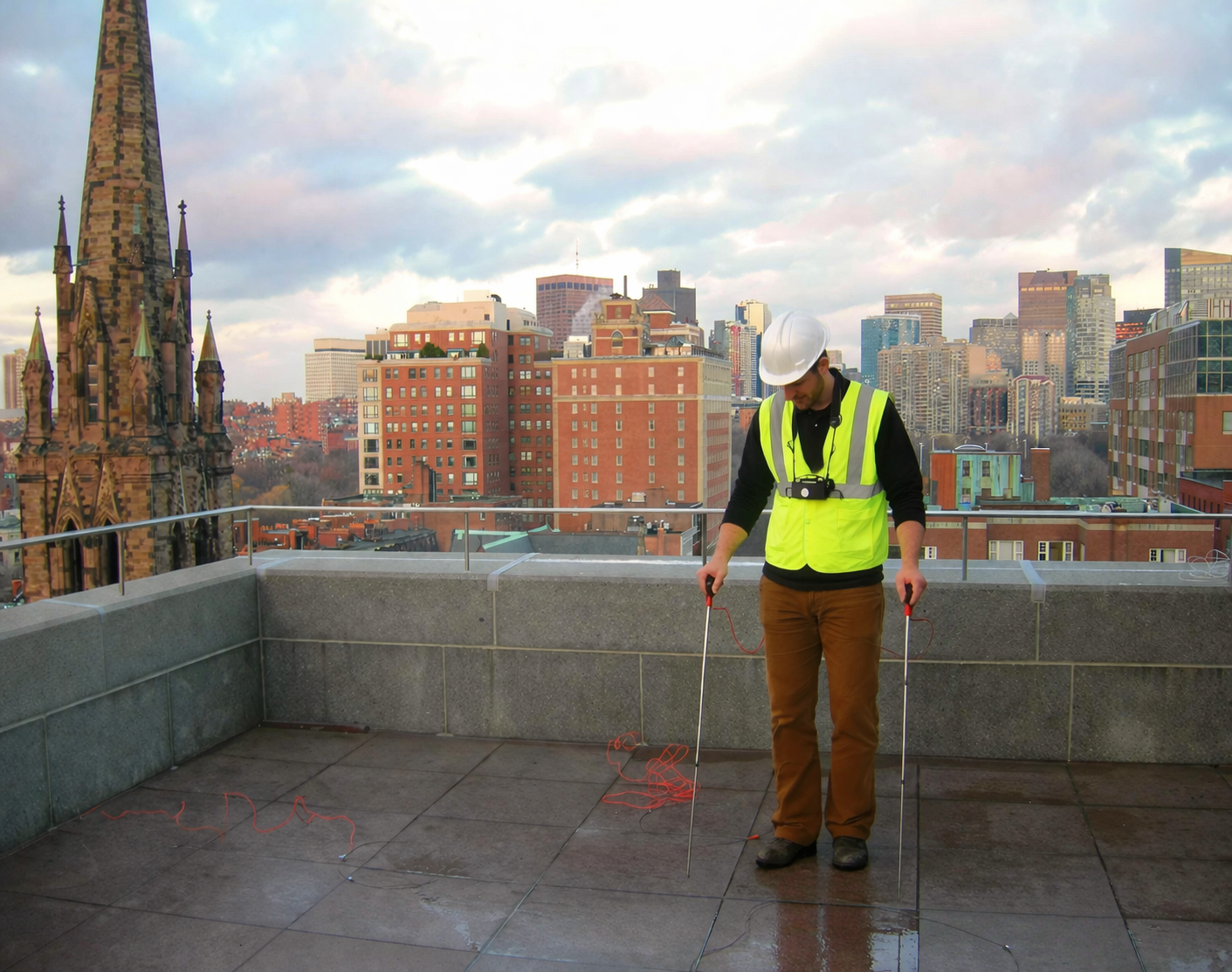
Low Voltage Vector Mapping
Low Voltage Vector Mapping is a non-invasive testing method that maps the direction and location of moisture migration beneath the roof membrane without damaging the system. This technology is also commonly referred to as EFVM (Electronic Field Vector Mapping) and ELD (Electronic Leak Detection), and is widely used to accurately identify breaches, defects, and areas of moisture intrusion within roofing and waterproofing systems.
Why method selection matters more than equipment listings. Read the technical note.
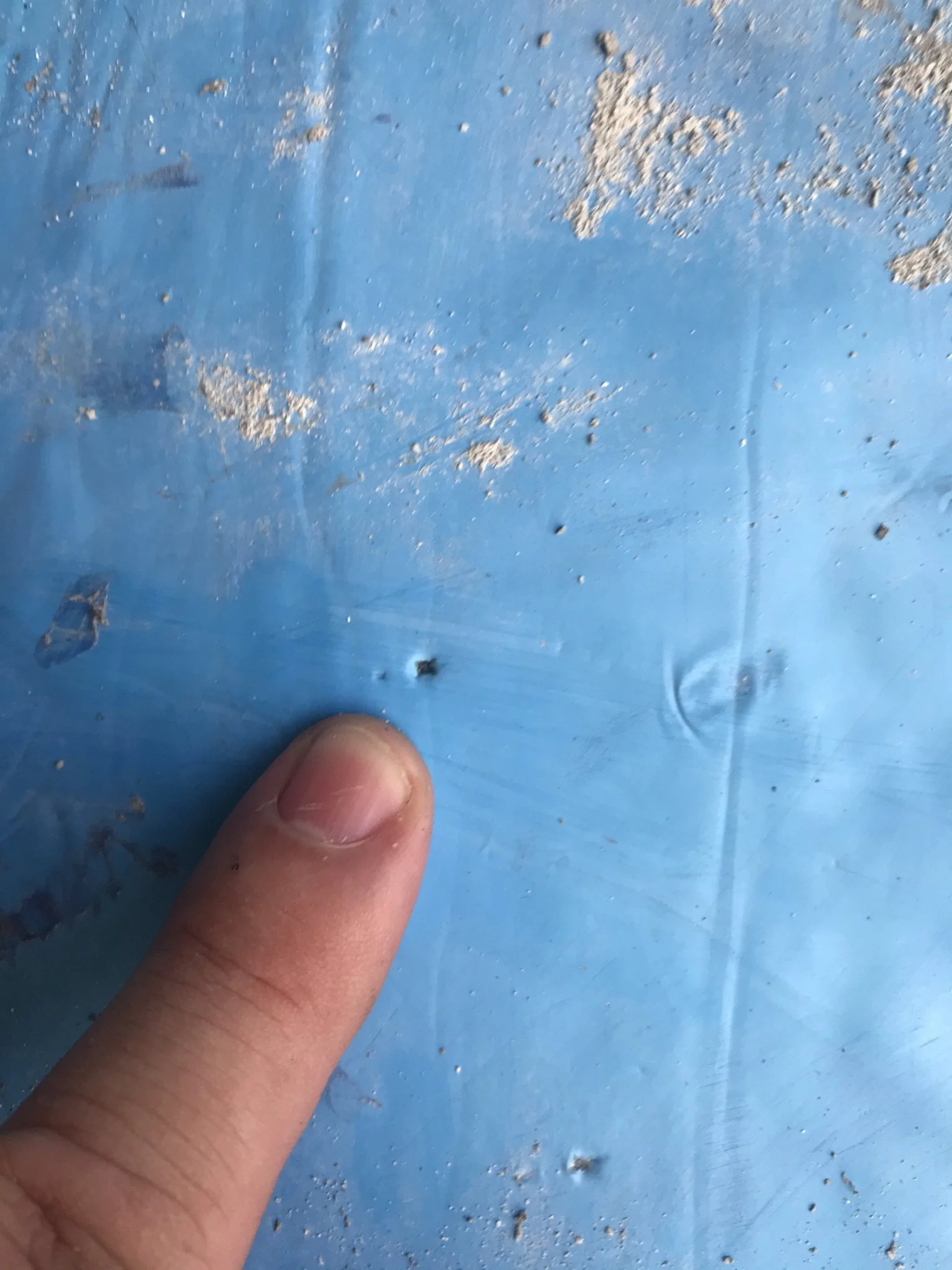
What you can expect
Fast Turnaround and Real Communication
Construction schedules don't wait. While larger firms can move at a slower, corporate pace, Roof Analyzers stays responsive, coordinates quickly, and delivers documentation fast — so your project keeps moving.
✔️ Compatible with most roof systems, including thermoplastic (heat-welded) membranes, self-adhered systems, single-ply and urethane membranes, hot- and cold-applied
liquids, rubberized asphalt, modified bitumen, white EPDM, and more
✔️ A more reliable alternative to flood testing and infrared for pinpointing breaches and verifying repairs
✔️ Same-day quotes — you'll know what the job costs before tomorrow
✔️ Calls returned within 2 business hours
✔️ Reports delivered within 3 business days
✔️ Efficient testing protocols designed to minimize downtime and keep schedules on track
✔️ Impeccable safety record — zero incidents in over a decade
We Get Results
“Using trained professionals and proven testing protocols, we help you deliver a watertight facility for your client—while strengthening your reputation.”
Clients & Sectors
Roof Analyzers partners with commercial property owners, facility managers, architects, consultants, insurance providers, legal professionals and many more to deliver independent roof system evaluations and technical reporting. Our diagnostic testing services support proactive maintenance planning, warranty validation, insurance claim assessments, construction quality assurance, and forensic investigations—helping stakeholders make informed decisions that protect building assets and reduce long-term liability.
Sectors










Companies we have worked with








Real-World Safety & Risk Mitigation
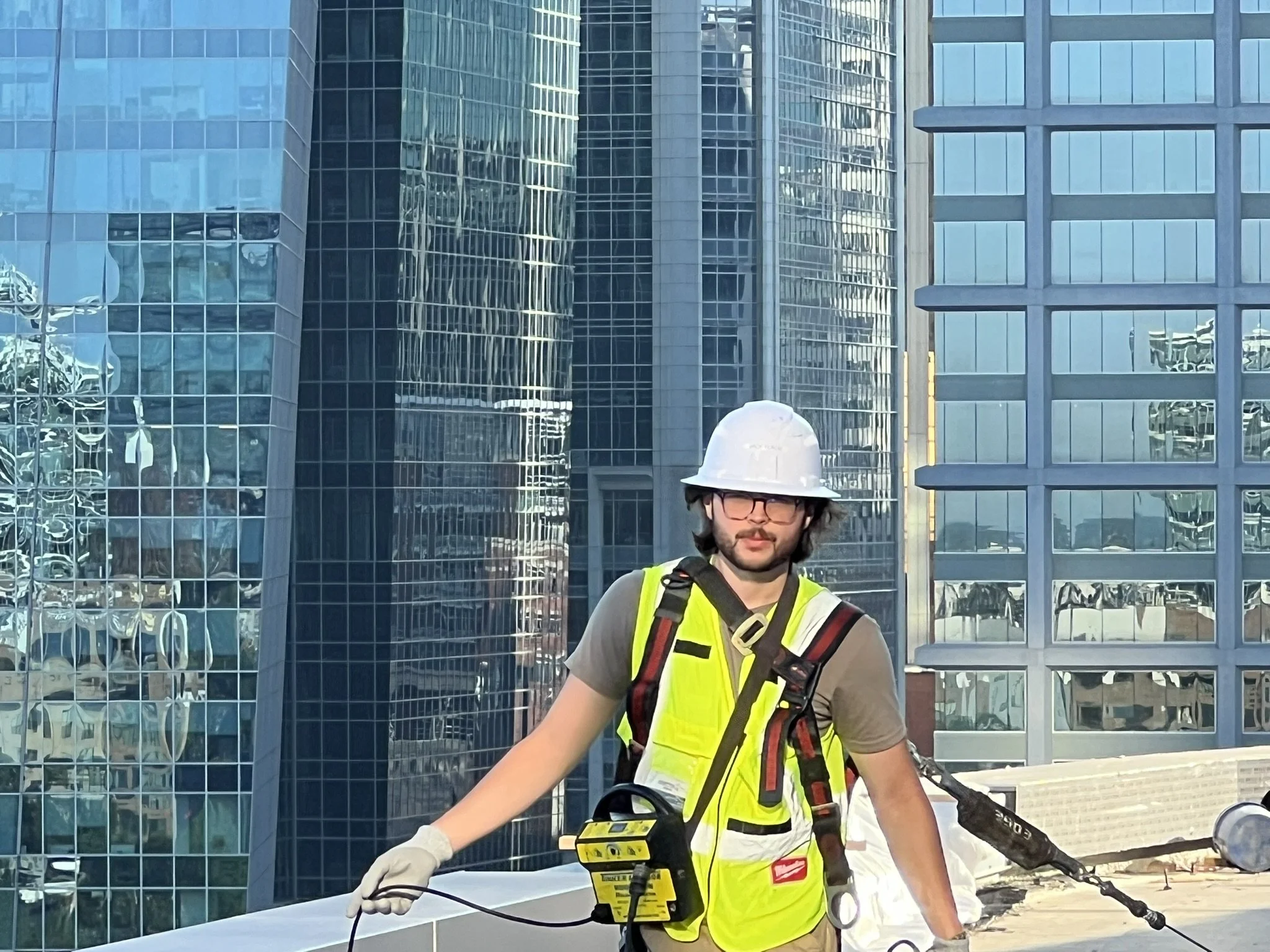
Our Approach to Safety
At Roof Analyzers, safety is not a box we check—it is the foundation of how we operate on every project, every day.
Our work places us in environments where precision matters and conditions can change quickly. Because of that, we approach every test with a disciplined, methodical mindset that prioritizes risk awareness, hazard recognition, and controlled execution.
Trained, Intentional, and Accountable
Every technician is trained not only in testing protocols, but in identifying and responding to jobsite risks in real time. We emphasize:
Pre-task evaluation of site conditions
Awareness of adjacent trades and temporary conditions
Proper equipment setup and grounding procedures
Maintaining control of energized systems at all times
Our team is expected to think beyond the task—to understand the environment they’re working in and how their actions impact others on site.
A Proven Safety Record
In over a decade of operations, Roof Analyzers has maintained:
Zero safety incidents.
That record is not accidental. It is the result of:
Consistent field discipline
Experienced personnel
Clear communication
Refusal to compromise standards for speed or convenience
Why It Matters to Your Project
Safety is not just about compliance—it directly affects:
Project continuity
Liability exposure
Trade coordination
Overall schedule reliability
When safety is handled correctly, projects move forward without interruption. When it’s not, even small oversights can create significant risk.
We take that responsibility seriously. When we are on your site, we operate with the understanding that our presence should reduce risk—not introduce it.
Why Roof Analyzers
Our philosophy is simple. First, we’re here to help give your client a watertight facility. Second, we’re here to make you look good for hiring us to help make sure it is.
The truth is, no one owns a patent on manual testing. But some companies absolutely do it better than others. Low Voltage Vector Mapping, often called EFVM, is as much art as science. And when a company has constant turnover in technician positions, those techs often never get enough experience to really learn how to test effectively.
It’s really not that important how many millions of square feet a company has tested. The real question is: how many square feet has the technician being sent to your project personally tested? In many cases, not nearly enough.
I have personally and successfully tested more than 3 million square feet of roofing across a wide variety of membrane types and project conditions. One thing that experience teaches you quickly is that every project is different, and experience matters.
In my experience, the most efficient and budget-conscious approach is often to perform a high-voltage sweep across the entire roofing assembly first, then follow with low-voltage vector mapping.
The high-voltage test helps locate most puncture-type anomalies, including many that may not be visible to the naked eye. Because it’s a dry test, repairs are usually easier to make right away. Then the vector mapping helps identify less obvious issues — things like debris under membrane edges, cold joints, open T-seams, migratory leaks, and similar conditions. It also gives us the opportunity to recheck repairs made after the high-voltage test.
It may sound counterintuitive, but using both methods in that sequence can often cover more roof, more effectively, and in less time than relying on EFVM alone.
And whenever applicable, we leave behind a fully installed vector mapping built-in system at no additional charge. In my opinion, dragging around a loose cable loop like some companies do is a good way to miss problems. A properly installed built-in system gives you a much more dependable setup for future testing, especially after overburden is installed.
And one more thing: we get there fast. In this business, it’s hard to predict exactly when testing will be needed, and we know delays cost money. We understand that. When you call us, we do our very best to respond quickly — often within a day or two.
—— Gregg Elrod, Owner